

Behind the Science of Sure: Pioneering a New Era in Breast Cancer Surgery
“One of the big trends in breast cancer care is de-escalation of surgery. Can we avoid surgery altogether? Or where we need surgery, how can we make it less invasive?”
These are the questions that Chief Technology Officer Quentin Harmer, Ph.D. and the team at Endomag — now part of Hologic’s Breast & Skeletal Health Solutions division — are focused on, through the development of patient-centered innovations aimed at reducing or potentially eliminating the need for complicated breast cancer surgery.
Breast cancer has a 99% survival rate when it is caught early and has not spread outside the breast.1 And with regular screening mammograms and new technologies, cancers are being discovered sooner.
“Many breast cancers when they are first discovered are very small, and this means that the prognosis is very good for those patients, but it also means that during surgery the cancer can be too small to see or feel,” shares Harmer.
A Magnetic Solution
To guide the surgeon, a magnetic seed — called the Magseed® marker — is placed in the tumor using imaging guidance such as ultrasound. The Magseed marker is a wire-free, magnetic seed localization method that allows surgeons to target breast tumors during breast-conserving surgery. During a procedure, the surgeon uses a magnetic probe to locate the marker, so they know which tissue to remove from the body and can spare as much healthy tissue for the patient as possible. The Magseed marker stays firmly in position until detected by the Sentimag® system for removal.2
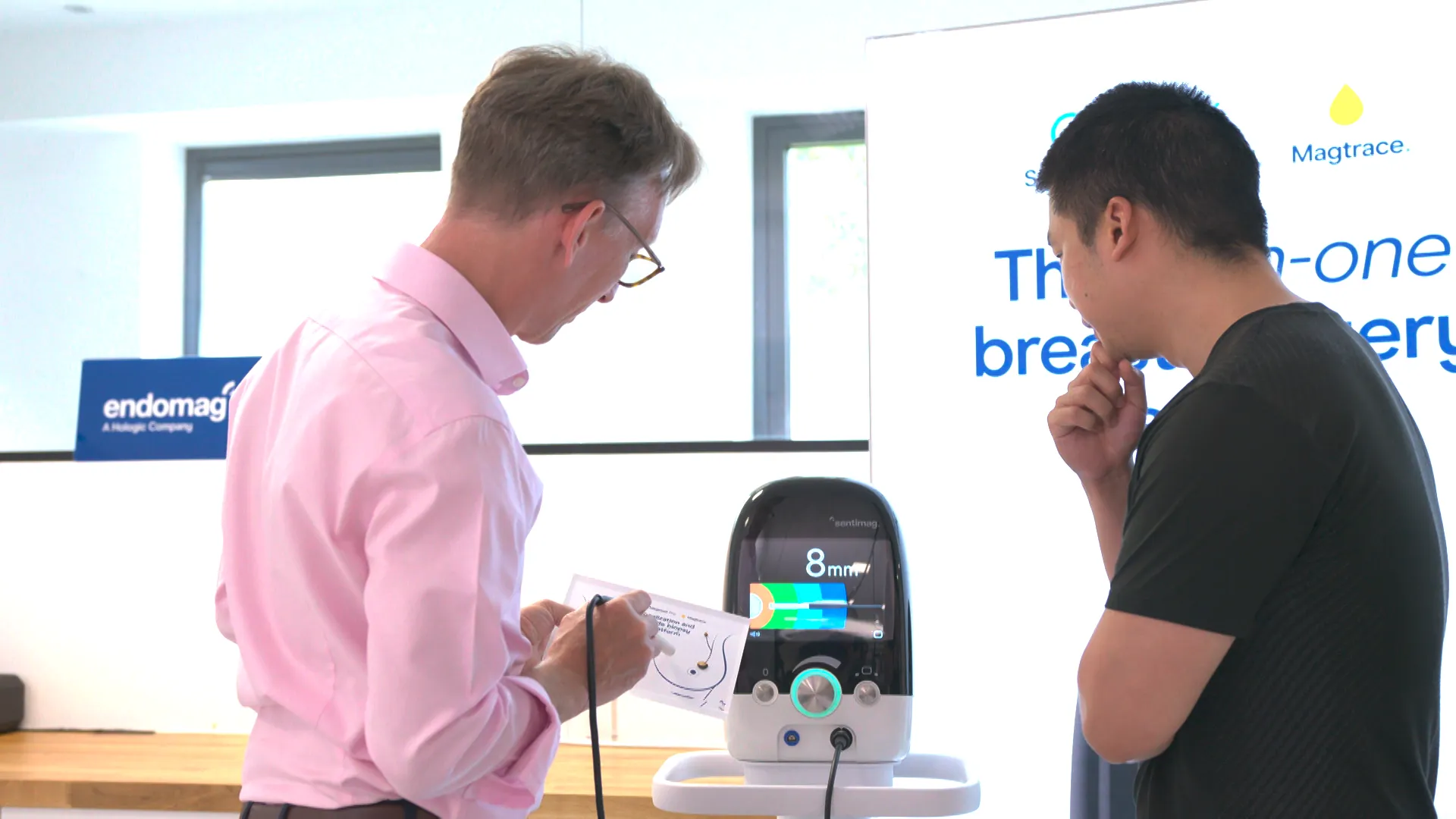
With the Magseed marker technology, re-excision rates can be reduced.3 “This means that some patients may not need to have a secondary surgery,” says Emma Bickerton, Therapy Development Manager.
The Magtrace® lymphatic tracer, another technology developed by Endomag, is used during sentinel node biopsies — procedures that can help determine if breast cancer has spread to the lymph nodes. This unique tracer uses magnetic guidance to identify specific lymph nodes for removal. It eliminates the need for radioactive material,4 offering a simpler option for surgeons and patients.
Shaping the Future of Breast Surgery
What defines the Endomag team, now part of Hologic, is their culture of innovation. “We’re always trying to evolve — getting less invasive, working toward better outcomes for the patient,” says Tanja Odenkirk, Clinical Development Manager, who oversees real-world clinical trials for Endomag. “What also excites me is that we are looking into potentially expanding in other areas outside of breast surgery.”
Surgeon feedback is a critical part of the R&D process according to Peter Constantinou, Senior Product Development Engineer. “Our engineering approach always involves listening to our patients’ and our surgeons’ needs,” he says, pointing out one example of Endomag’s engineering approach for the new version of the Sentimag system. “With our engineering process, we developed a probe with the goal of giving surgeons as much visibility as possible.”
Quote from Quentin Harmer, Ph.D.
“Listening to surgeons is really at the heart of our design process, and that's well illustrated by the genesis of the Magseed marker. As a small startup, we already had the Magtrace lymphatic tracer for locating lymph nodes. We would be talking to surgeons at tradeshows and they would say to us, ‘Well, that's great for lymph nodes but what about something to mark the tumor as well?’ And that’s where the Magseed marker started.”
For hospitals, Endomag’s technologies can save time and help with capacity issues, since the magnetic marker that helps guide the surgeon can be placed in advance of a procedure. The patient doesn’t need to go to radiology or nuclear medicine on the day of surgery because they already have the marker placed, meaning that hospitals can potentially increase their capacity so more patients can be treated.
“The end products take the patient into account and everything that they're going through during their surgeries,” says Bickerton. “And I absolutely love that I get to be part of that mission. We are changing what the future of breast cancer surgery looks like.”