

Global Reach, Personal Touch: AI’s Potential to Transform Breast Cancer Screening for Patients Everywhere
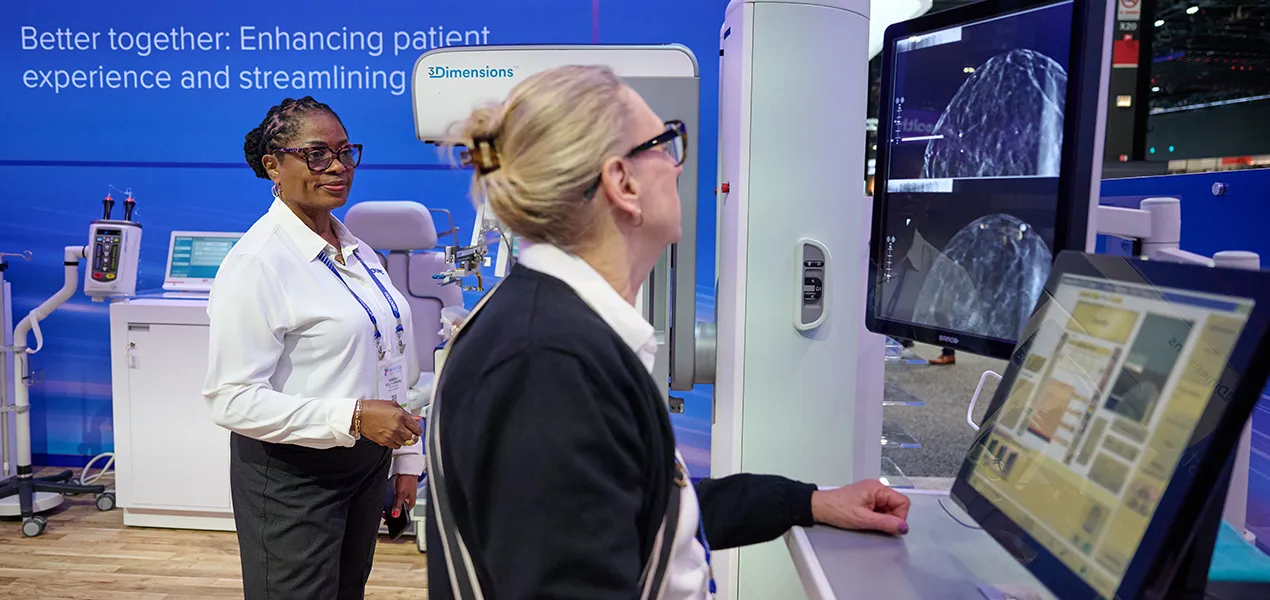
From helping radiologists detect breast cancer earlier to streamlining mammography workflows, AI is rapidly transforming the field of medical imaging and breast health. Liz Asai, Vice President, Global Head of AI and Connected Health at Hologic, shares how these technologies are shaping radiology and the future of patient care.
For Liz Asai, the promise of AI in healthcare is in its scale. As Global Head of Artificial Intelligence (AI) at Hologic, she is leading the development of AI-powered mammography technologies that are designed to support earlier cancer detection and reduce time and workloads for radiologists.
Asai began her career at a company that used AI algorithms to detect skin cancer and later expanded her focus into eye health, with a tool that used deep learning to diagnose diabetic eye disease.

At Hologic, the innovative solutions her team develops have the ability to touch millions of lives through mammography, a screening test for breast cancer. “Most other healthcare AI applications are very niche,” Asai explains. “At Hologic, our algorithms can help 40 million women each year.”
For patients, AI can quickly flag the smallest cancers for review and additional testing, leading to earlier treatment and better outcomes. For healthcare providers, AI has the potential to reduce the amount of time needed to review mammography images while helping them to detect more breast cancers.
Early Detection in Action: How AI Helps Find Subtle Breast Cancers
With technologies such as Hologic’s Genius AI® Detection technologies, AI is acting as a second set of eyes for radiologists, pointing out areas that need a closer look.
In some cases, it has helped catch very small cancers that had previously been missed, such as this story of a patient in Canada who was able to receive cryoablation — a minimally invasive treatment that freezes cancer cells — because her cancer was caught early with the help of AI.
“In that case the cancer had been overlooked initially, but after a second review with AI they were able to catch and treat the cancer when it was only about 3 millimeters,” said Asai. “We are talking about very, very early stage where it could be treated with a minimally invasive approach — and that is exactly the reason why we are building these technologies to enable that earlier detection.”
Hologic’s AI analyzes each mammography image and assigns a score indicating the likelihood of cancer, helping radiologists quickly identify which patients may need additional diagnostic imaging.
“If there’s a high chance that cancer has been found, the technology will quickly flag that for the radiologist and in some cases, the patient can stay right there at the medical facility and get additional diagnostic testing if needed,” said Asai. “If breast cancer is present, this can mean an earlier diagnosis for the patient and the start of potentially lifesaving care.”
Making Radiology Workflows Faster and More Efficient
In addition to flagging suspicious areas for review so that cancer can be found sooner when it may be the most treatable, AI is also making the entire mammography review workflow process easier and faster, which can ease workloads for radiologists and translate to improved patient care owing to lower perceived fatigue and potential burnout among providers.
Smart AI assistants, such as Hologic’s next-generation Genius AI Detection PRO can pre-populate exam reports that the radiologist simply needs to review for accuracy. This can save substantial administrative work so that time can be spent looking at images rather than typing out reports. “This is the future of the field, with less time being spent on manually dictating or writing reports and more time being freed up to review images,” says Asai.

AI can also quickly compare a patient’s current mammography images to those taken a year or two ago, pointing out any changes over time that the radiologist should pay attention to. And for women who have dense breasts, which may put them at higher risk for developing breast cancer1 and can make it more challenging to see cancer on a mammogram, AI-powered breast density scoring can inform the radiologist of an individual’s unique characteristics and help support more personalized care.
Quote from Liz Asai
“AI in radiology has evolved far beyond simply flagging suspicious lesions on a mammogram. We now can give radiologists a one-stop shop to review relevant information from the patient’s medical record and assess image quality, breast density and potential breast cancers, and then auto-generate a draft of the radiologist report with each of those insights. All of these advancements help us continuously improve — and personalize — patient care.”
AI’s Future in Medicine: Challenges, Opportunities and Why Human Judgment Remains Critical
Broader challenges remain in the application of AI, according to Asai, such as ensuring the data being used to train AI models is representative of the diversity of patients it aims to serve. And while large language models are receiving global attention and use, they need careful testing before being used in healthcare.
Asai also emphasizes that AI will never replace the human touch in medicine. Rather, it will make other, more administrative aspects of healthcare providers’ jobs easier, giving them more time to spend with patients. As AI more broadly continues to advance, Asai expects it will impact many different facets of healthcare — from the development of diagnostic tools and more tailored treatments to the ways care is delivered.
Asai sees AI use in mammography expanding in the future to include the ability to assess short-term risk for patients. “This means expanding beyond detecting cancers that are already present, to using AI to predict whether someone will develop cancer in the next few years,” she says.
At Hologic, the team is also researching how AI might find signs of other health problems in mammograms, so doctors could check more than just breast health in one visit.
AI continues to evolve, bringing promise for faster diagnoses and more personalized care. And with mammography screening a cornerstone of preventive care for women around the world, the team at Hologic is able to deliver at scale.
1. Dense Breasts: Answers to Commonly Asked Questions. Cancer.gov. Published December 2, 2025. https://www.cancer.gov/types/breast/screening/dense-breasts.
The content in this piece is for informational purposes only and is not intended to be medical advice. Please contact your medical professional for specific advice regarding your health and treatment. This information is not intended as a product solicitation or promotion where such activities are prohibited. Because Hologic materials are distributed through websites, eBroadcasts and tradeshows, it is not always possible to control where such materials appear. For specific information on what products may be available in a particular country, please write to womenshealth@hologic.com.