

How Data Can Serve as a Lifeline for Women’s Health
“The number one reason people report being behind on cancer screenings is that they just didn’t know they needed to be screened,” said Jody Hoyos, CEO of the Prevent Cancer Foundation, citing her organization’s 2025 early detection survey.1
But cancer is only part of a broader preventive care gap for women.
An estimated 1.5 billion adult women worldwide have not received essential screenings for cancer, high blood pressure, sexually transmitted infections or diabetes in the past year.2
This finding, from the latest Hologic Global Women’s Health Index, highlights the scale of the gaps in women’s health systems and the need for better data on how women experience care.
“The Hologic Global Women’s Health Index was created in partnership with Gallup to close a fundamental knowledge gap in global health,” said Dr. Mia Keeys, Director of Global Health and Innovation at Hologic. “Data is the starting point, but its real value is in how it informs action.”
Now in its fifth year, the Index has surveyed women in more than 144 countries, creating one of the most comprehensive global datasets on women’s health and healthcare experiences.
Why data matters
Earlier this year, Hologic and Gallup convened leaders in global health, policy and development in Washington, D.C. to discuss what five years of data reveal — and what must happen next.
“We’re here to talk about data, but very importantly, this data is about women’s lives,” said journalist Elvina Nawaguna, who moderated the discussion.
“Tracking impact through data is essential. We need to be able to show what’s working,” said Janet Fleischman, an independent consultant on global health and gender equality and senior associate with the Center for Strategic and International Studies Global Health Policy Center.
But data alone are not enough.
“We need women’s voices and their lived experience to be guiding us on the way forward,” said Fleischman.
According to Ritu Sharma, Chief Global Policy Officer at CARE, many women interact with healthcare systems primarily through their communities. “The vast majority of women in the world get their access to healthcare from a community health worker or health extension agent,” she said.
For millions of women, particularly in rural or low-resource communities, clinics and hospitals may be far away or difficult to reach. “They very rarely have the ability to walk to a district health clinic and would only do so if something were life threatening,” said Sharma. “So, I was actually surprised to see that the number was only one and a half billion women are missing screenings.”
The critical role of prevention
In settings where access to treatment may be limited, prevention and early detection become even more important.
“For most women living in poverty, screening is literally the only option,” Sharma said.
Panelists emphasized that screening does more than detect disease early. It can also serve as a gateway to broader healthcare services.
“Prevention and screening are foundational pillars in this effort,” said Fleischman. “Screening represents an essential entry point to other health services — a platform potentially for comprehensive care across the life course.”
“Improving women’s health means addressing the structural barriers that shape it, including poverty, gender and racial inequities, stigma and limited health literacy,” said Dr. Keeys. “Health outcomes don’t exist in isolation. They are shaped by social, economic and cultural factors that must be part of the solution.”
When those barriers are addressed, the impact extends far beyond individual patients.
“When women have the opportunity to reach their full health potential, the benefits ripple outward, strengthening families, communities and economies around the world,” Dr. Keeys said.
Yet, even when screening services are readily available, general awareness and health system design can create additional barriers.
“Sometimes when we are asking questions about screening, there’s not a great understanding of what that is,” said Hoyos. “A few years ago, what we noticed in our data was a big increase in the number of people reporting they had a lung cancer screening, and it didn't match the national average at all. It was a big spike. We went back, did focus groups, requestioned and found out that people's perceptions of a lung cancer screening was a stethoscope to the chest.”
Logistical hurdles can also make routine screening difficult.
“It’s just so fragmented for women,” said Hoyos. “My mammogram happens in one place. My cervical cancer screening happens in another.”
For many women balancing work and caregiving responsibilities, she said, coordinating multiple appointments can quickly become untenable.
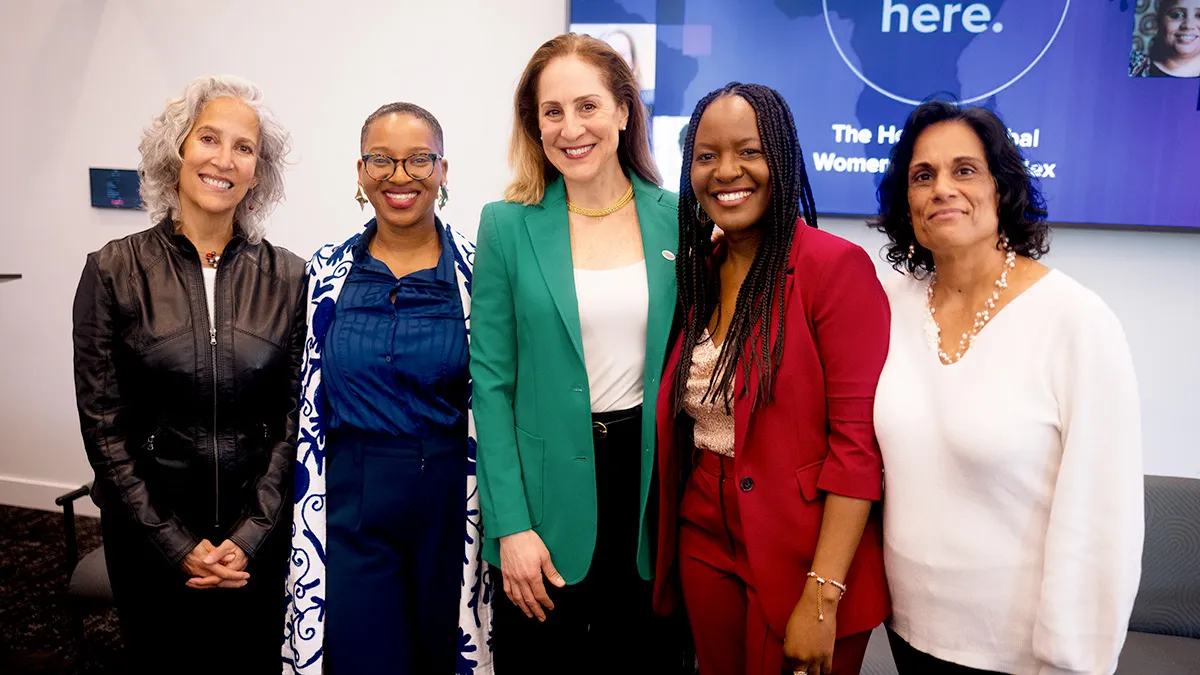
From left to right: Janet Fleischman, Dr. Mia Keeys, Jody Hoyos, Elvina Nawaguna, Ritu Sharma
Where the data points next
With five years of Index data, experts say expanding and refining these insights will help identify not only gaps, but also solutions.
“I would love to see more granularity,” said Sharma. “Where are the positive outliers in very low resource settings? How are they making gains and how can that be translated to other low resource settings?”
For Fleischman, progress will require strategic focus and collaboration across sectors. “We can’t do everything everywhere all at once,” she said. “We have to choose our battles and prioritize based on data, feasibility, logistics and coverage rates, and build from there.”
Ultimately, the purpose of the Index is not simply to measure global health trends, but to help guide action.
“The Index provides a benchmark, but the goal has always been impact,” said Dr. Keeys. “Scaling data driven approaches and accelerating research into women’s health conditions is critical if we want to see meaningful progress. The question now is how governments, health systems and partners use these insights to drive real change for women.”
- Prevent Cancer Foundation. (2025). 2025 Early Detection Survey. https://preventcancer.org/education-outreach/2025-early-detection-survey/
- Hologic. (2026). Hologic Global Women’s Health Index. https://hologic.womenshealthindex.com/
The content in this piece is for informational purposes only and is not intended to be medical advice. Please contact your medical professional for specific advice regarding your health and treatment. This information is not intended as a product solicitation or promotion where such activities are prohibited. Because Hologic materials are distributed through websites, eBroadcasts and tradeshows, it is not always possible to control where such materials appear. For specific information on what products may be available in a particular country, please write to womenshealth@hologic.com.