

Tanja Brycker on Harnessing Data, Technology and AI to Advance Women’s Health
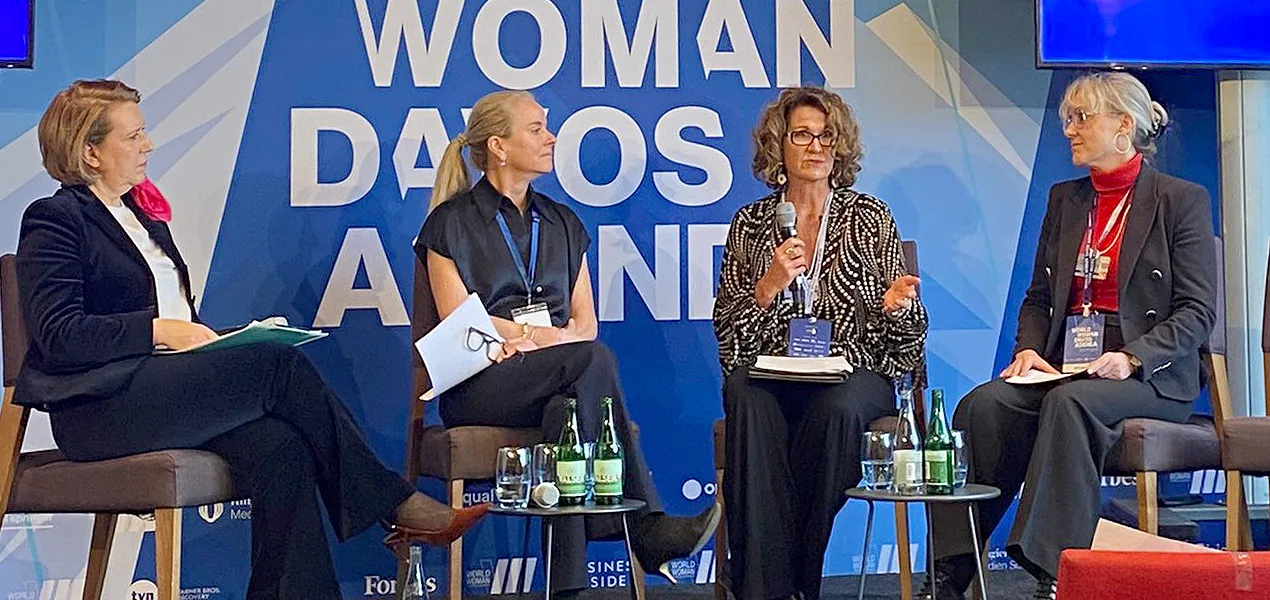
Tanja Brycker (second from right) speaking at the World Economic Forum Annual Meeting in Davos, Switzerland.
Tanja Brycker has seen the realities of women’s health up close. She began her career as a nurse and midwife in intensive care units and delivery suites in Australia, where she saw how one woman’s illness could ripple through families and communities.
Today, as Vice President, International Strategic Development, Breast and Skeletal Health and Surgical Solutions at Hologic, Brycker works with partners across international markets to change that story. A key aspect she is focused on is ensuring new innovations, like AI, can positively impact healthcare resource limitations, elevate diagnostic efficiency and efficacy, and help close long-standing gaps in women’s health worldwide.
Addressing women’s health at every life stage
Studies have shown that women often shoulder the burden of unpaid care, such as caregiving for children and older parents. When those women are unwell, families struggle, communities are strained and economies suffer.
This is one reason Brycker rejects the narrow view that “women’s health” is only about gynecologic care or reproductive health. From cardiovascular disease to lower bone density, health conditions affect women differently across life stages — before puberty, during their reproductive years and after menopause.
One example is osteoporosis, a condition that disproportionately affects women, especially as they reach menopause. Osteoporosis is estimated to affect 200 million women globally — approximately one-tenth of women over age 60 and one-fifth of women over age 70.1 Worldwide, one out of every three women over age 50 will experience osteoporosis fractures,2 which can have substantial effects on quality of life.
Women also face inequities in cardiovascular care. Studies have found women visiting an emergency room with chest pain or other symptoms wait 29% longer — or about 11 minutes more — than men to be evaluated for possible heart attack.3 Women are also up to seven times more likely than men to have a heart condition misdiagnosed and be discharged during a heart attack.4
A framework for changing the conversation around women’s health
Through her work at Hologic with the Global Women’s Health Index and with policymakers across Europe, Brycker has seen how strong data and dialogue can shift mindsets when it comes to women’s health. When speaking with government leaders, Brycker frames the conversation around what she calls “the seven A’s”:
- Awareness: Focuses on driving awareness of the importance of preventive screening among communities. It also aims to address gaps in awareness of the different ways in which health issues can present differently in women to men.
- Access: Explores financial, cultural and geographic barriers that often limit access to regular screenings or health checks, timely diagnosis, comprehensive treatment and follow-up care — especially for women in underserved communities.
- Affordability: Focuses not only on payment or funding arrangements for preventive care and treatment, but also the hidden costs to women: cost of transport and of time away from work and caretaking responsibilities.
- Advocacy: Emphasizing, at the individual, community and societal levels, the inequity and disparities in health policy, the lack of inclusion of women in clinical trials and research, and the lack of investment in the development of gender-specific care and technologies.
- Attitude: Highlights the opportunity to help women put themselves — and their health and well-being — first, by informing themselves about preventive care. It also extends to the attitude of caregivers and awareness of biases.
- Age: Recognizes that the healthcare a woman needs differs based on her age and life stage.
- Acuity: Underscores that when the health challenges that occur across a woman’s lifespan are misdiagnosed or dismissed in their acute phase, it can cause delays in care, leading to worse health outcomes and diminished quality of life.
These 7 A’s can help to highlight the burden of disease in women, the inequity that exists in healthcare systems and political and funding mechanisms, and how governments can play a leading role in reimagining healthcare for women globally.
“If they’re serious about GDP and economic growth, they need to be looking to the half of the population that are contributing to it, either through paid jobs or unpaid jobs,” said Brycker, pointing to the trillion-dollar opportunity in women’s health cited by McKinsey.

Watching technology reshape care
Brycker's clinical years overlapped with rapid technological change in hospitals, including an influx of computerization and early forms of machine learning that transformed care for patients everywhere.
“It was during that period when I saw the power of what well-designed, patient-focused, medical technology can do to positively impact a patient’s journey,” said Brycker.
These experiences convinced her that technology is not separate from care — it is an integral part of it.
“Healthcare today cannot be delivered without technology,” she said. “Whether it’s an oxygen mask, a ventilator, an AI-powered mammography system or a molecular diagnostic system — healthcare technology and devices are integral to the patient care that’s delivered by healthcare professionals at the bedside. They’re inseparable.”
The promise of AI as a powerful equity driver
Now, Brycker sees another transformation gathering pace: artificial intelligence.
She believes AI models, when trained using health data from diverse populations, can help solve some of the greatest challenges in women’s health around the world — especially speed to diagnosis, workforce shortages and uneven access to specialists.
Brycker recalls an analysis of what it would take for a country to implement a population-based breast screening program from start to finish. In addition to establishing a population register, to build a healthcare infrastructure, purchase and install equipment, and then recruit and train enough radiographers and radiologists to run the services, estimates put the timeline in the decades. This example underscores the challenging resource constraints that are being felt globally in healthcare today.
In Brycker's view, this is where AI systems will continue to grow in importance for medical programs such as breast cancer screening. AI tools can support early detection of diseases like breast cancer and cervical cancer in regions with few specialists; lighten clinical workloads and support staff retention; improve workflow efficiency; and reduce diagnostic delays that can put women at risk.
“The load on clinicians today is phenomenal,” she said. “Yes, AI will be an enabler; it will be an adjunct. There’s no separating the benefit of what AI-driven technology will help to deliver in healthcare today and in the future.”
For Brycker, AI is not about replacing clinicians, but about amplifying their impact — particularly in women’s health, where unmet needs remain significant. AI offers powerful solutions to bridge gaps and enable more personalized, effective and equitable healthcare for women.
A North Star rooted in women’s healthcare
Amid all the changes she has seen in healthcare over the decades, Brycker's goal has remained constant: influence patient outcomes for the better.
To her, that means focusing on women’s health — to challenge the status quo with strong data, to raise awareness of where inequity exists and highlight the benefits of equitable care for women, their families, communities, societies and economies.
By advocating for both women’s health and adoption of innovative technologies, Brycker and the team at Hologic are committed to helping to shape a global health sector that leaves no woman behind.