

Listening, Explaining, Empowering: Inside Hologic’s Nurse Advocate Program for Abnormal Uterine Bleeding and Fibroids
For many women living with heavy periods and uterine fibroids, it can feel like this is “just how it is” for them — or, that a hysterectomy is the only way to find relief. Hologic’s nurse advocate program exists to help change that.
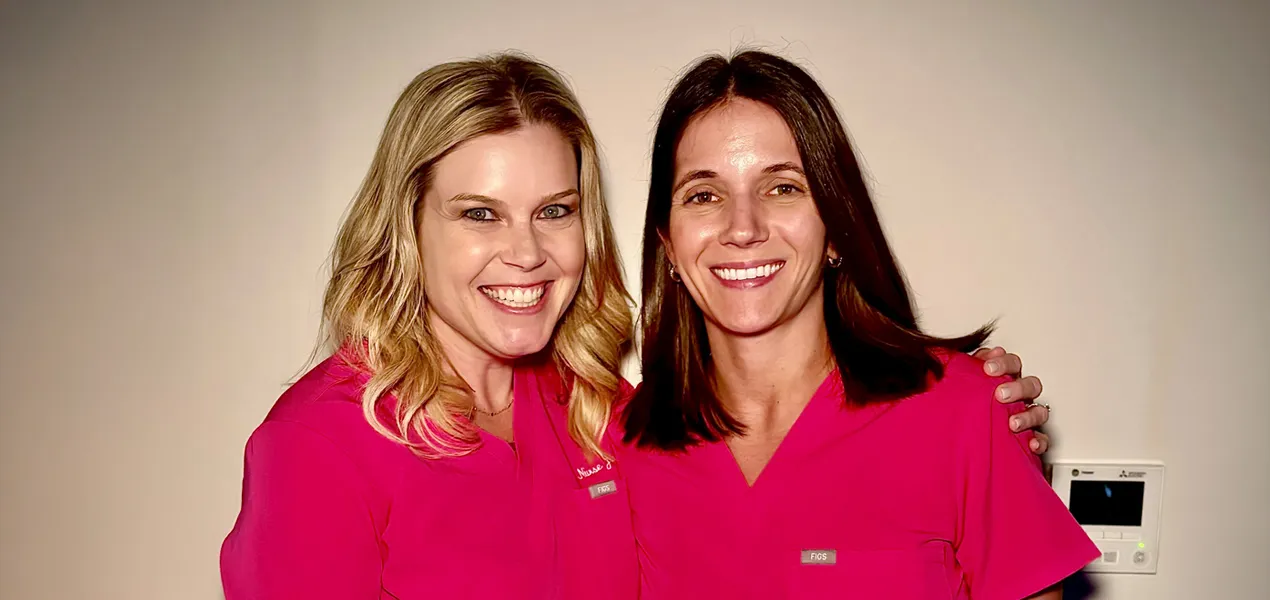
Led by registered nurses Annie Yehudian and Jamie Hosman, the program helps women understand their treatment options for abnormal uterine bleeding and fibroids — from medications to minimally invasive procedures to surgery — so they can make an informed decision about their care.
What is abnormal uterine bleeding?
Abnormal uterine bleeding (AUB) is bleeding that is irregular in timing, too heavy, too frequent or lasts too long and happens outside of pregnancy.¹
In general, a normal period:
- Is bleeding 80 mL of blood or less.
- Lasts 3–7 days.
- Should need fewer than 16 regular tampons, 6 overnight pads or 3 full 25 mL menstrual cups during a full cycle.
A common cause of AUB is fibroids — non-cancerous growths in the uterus — which can also cause bloating, pelvic pain, bladder problems and other symptoms that can impact a woman’s quality of life.
From the bedside to the call line
Both former practicing nurses, Hosman and Yehudian spent many years in the labor and delivery ward before coming to Hologic. As clinical specialists, they helped train surgeons and operating room teams on minimally invasive procedures to treat fibroids — but they missed regularly interacting with patients.
When Hologic acquired Gynesonics, developer of the Sonata® system, it also adopted its nurse advocacy model. Hosman and Yehudian saw an opportunity to step back into a patient-facing role.
“As we all know, women’s health is rarely given the attention that it deserves,” Hosman said. “These patients are eager to talk to somebody. They just want someone to help them.”
How do women connect with a nurse advocate?
Many women find the program through social media or Hologic’s physician finder website and complete a short form to request a call. Hosman or Yehudian then reaches out by email or text to schedule time.
Some women already know they have fibroids but are frustrated by limited options. Others only know their periods are heavy, painful and disruptive.
“I like to start with, ‘Can you describe how your period is for you?’” said Yehudian “Are you bleeding three days, five days, 10 days? How often are you changing your tampon or pad? Are you putting a towel down on your bed at night? This gets to the question of whether a person’s period is disrupting their life.”
Hosman also walks through key questions: Have you been diagnosed with fibroids? When was your last ultrasound or MRI? What have you already tried?
“What’s normal for me is not normal for you,” she said. “But if you’re changing a super-absorbent pad or tampon every hour, that is not normal. If your bleeding or pain is forcing you to leave work, your classroom or even a vacation, that’s not something you just have to live with.”
Education, not medical advice
The nurse advocates do not diagnose or recommend specific treatments. Instead, they focus on health education and navigation.
“We’re not giving medical advice,” Yehudian said. “That’s up to the physician. But we’re laying the groundwork so when they go to their doctor’s office, they feel prepared and empowered going into that conversation instead of overwhelmed.”
Once Hosman and Yehudian have all the information, they walk through all the different treatments available, which depending on the patient’s situation can include:
- Hormonal birth control or intrauterine devices (IUDs).
- Radiofrequency ablation procedures, such as the Acessa® or Sonata systems.
- Other gynecologic procedures, including the MyoSure® device or NovaSure® procedure when appropriate.
- Surgical options such as myomectomy or hysterectomy.
“I always tell women there are options,” Hosman said. “You don’t have to jump straight to a hysterectomy if that’s not what you want.”
Based on a woman’s symptoms, history, insurance and location, Hosman and Yehudian help connect her with a specialist in her area.
“I never thought this could be possible”
The impact is often emotional.
Yehudian recalls a woman who had seen five or six specialists and was told hysterectomy was her only choice, even though she deeply wanted to keep her uterus.
“She was missing so much work; she was about to go on medical leave,” Yehudian said. “She was exhausted, anemic and felt like she had to give up a part of herself to get better.”
Insurance issues delayed the first referral, so they found another doctor. When the woman finally saw a specialist who could offer a uterus-sparing procedure, she called Yehudian afterward in tears.
“She told me, ‘I never thought this could be possible,’” Yehudian said.
Encouraging open conversation
Hosman and Yehudian hope to see the program grow to more nurses and more countries — and to support a broader range of Hologic’s gynecologic procedures over time.
They also want more open conversations about AUB and fibroid symptoms.
“A golf-ball-sized fibroid can still wreak havoc depending on where it is,” Yehudian said. “You don’t have to wait until your fibroids are the size of a grapefruit to ask for help.”
Hosman adds a simple message for women everywhere: You are not alone.
“I wish I could talk to some of these women a few years earlier,” she said. “There are resources and options. You deserve to be heard.”
Do you know someone who is facing symptoms of fibroids or heavy periods? Visit this page to connect with a nurse advocate, and learn more about Hologic’s minimally invasive treatments for fibroids and AUB. Program availability and treatment options may vary by country.
1. ACOG. Management of acute abnormal uterine bleeding in nonpregnant reproductive-aged women. www.acog.org. Published 2024. https://www.acog.org/clinical/clinical-guidance/committee-opinion/articles/2013/04/management-of-acute-abnormal-uterine-bleeding-in-nonpregnant-reproductive-aged-women.
The content in this piece is for informational purposes only and is not intended to be medical advice. Please contact your medical professional for specific advice regarding your health and treatment. This information is not intended as a product solicitation or promotion where such activities are prohibited. Because Hologic materials are distributed through websites, eBroadcasts and tradeshows, it is not always possible to control where such materials appear. For specific information on what products may be available in a particular country, please write to womenshealth@hologic.com.