Training the Next Generation of Clinical Laboratory Scientists at Hologic
What started as one employee’s idea to pay it forward has become a career-changing professional development opportunity inside Hologic’s oncology laboratory.
For Kate Church-Nguyen, her work in Hologic’s Biotheranostics Oncology Laboratory is personal.
“Each patient sample that comes through our lab could be from our mom, our sister, our neighbor, our friend,” said Church-Nguyen, Senior Manager of Laboratory Testing Solutions. “We treat them like family.”
Church-Nguyen oversees a team that runs Breast Cancer Index® (BCI®) testing, which helps inform decisions about endocrine therapy duration for patients with early-stage breast cancer, as well as CancerTYPE ID® testing, which helps physicians achieve a definitive diagnosis for patients with metastatic cancer with an unclear diagnosis.
Church-Nguyen's connection to patients — and her own hands-on experience in laboratory testing — inspired her to launch an internal clinical laboratory scientist training program at Hologic in 2023.
Quote from Kate Church-Nguyen
I don’t think I could ever not work in a clinical space. Knowing how close you are to a patient, it’s just so rewarding.
What does a clinical laboratory scientist do?
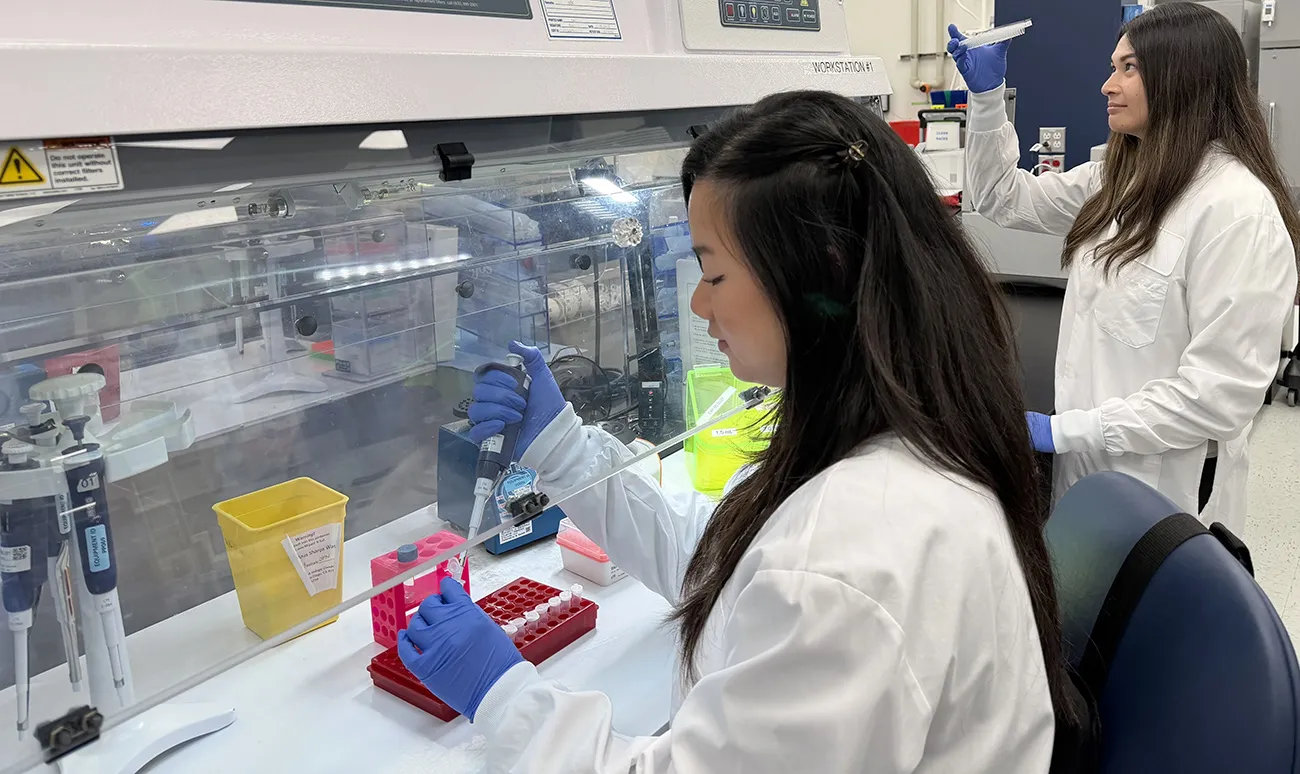
A clinical laboratory scientist, or CLS for short, is a licensed laboratory professional who is trained to handle patient samples and perform complex clinical chemistry that helps physicians make informed decisions about patient care.
In an oncology laboratory, that can include performing patient testing, analyzing data, ensuring quality control and improving overall laboratory workflows.
At Hologic, this work is carried out by a dedicated team of colleagues who understand that each sample represents someone waiting for answers.
From mentee to mentor
Church-Nguyen’s early career spanned research and development roles, but she knew she wanted to be able to advance her laboratory work and process patient samples, which required a CLS license.
“I wanted to have more of a direct impact on patient lives,” said Church-Nguyen.
Luckily, a mentor at her previous company created an in-house CLS training program, allowing Church-Nguyen to earn her license while she worked, instead of having to pursue an external program that may conflict with her job commitments.
After joining Hologic and moving into a leadership position, she saw an opportunity to create a similar career path for others.
“We had so much talent in unlicensed individuals,” she said. “I saw this as a great way to reward them for being outstanding members of our laboratory, to give them the opportunity to earn this license and take on a bigger role, and to then retain that talent.”
The program combines weekly lectures by Hologic peers with hands-on clinical training and preparation for the American Society for Clinical Pathology (ASCP) certification exam.
So far, the first four graduates have all earned their licenses.
“I cried every time they texted me that they passed,” Church-Nguyen said. “It feels better than me passing.”
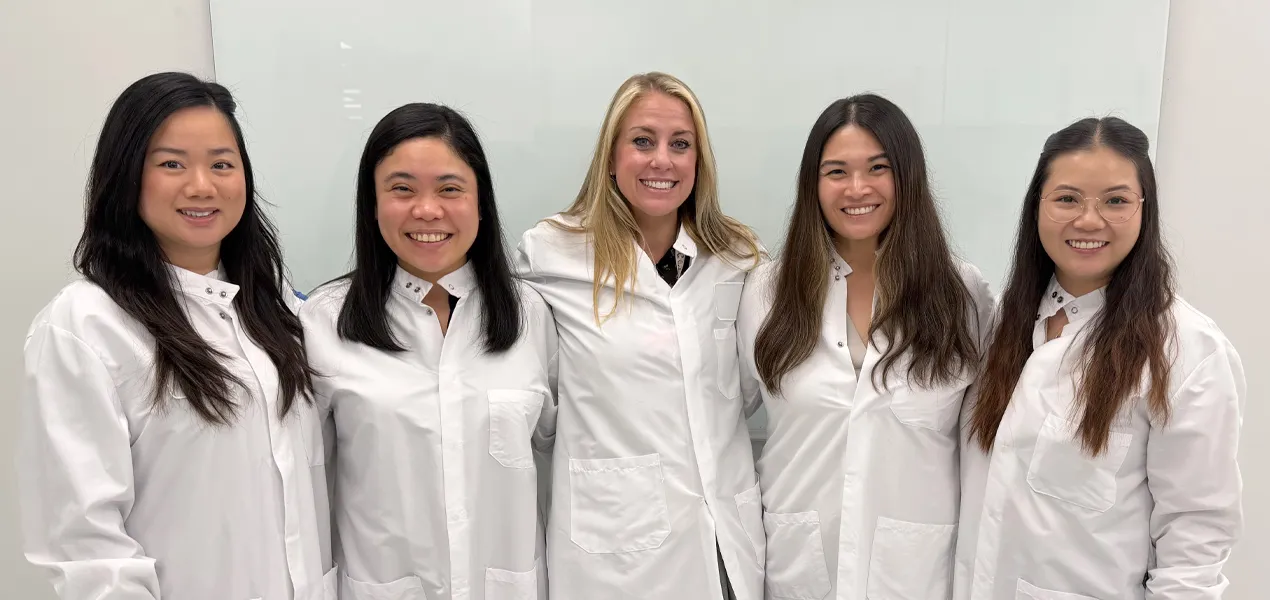
Four graduates, one shared purpose
For these graduates, the path to earning their license included full-time, on-the-job training and mentorship, after-hours studying and a return to a student mindset.
“It was hard,” said Megan Quitevis, now a CLS I. “But, thanks to this program, I didn’t have to worry about how I was going to pay my bills while I pursued this important next step in my career. I could focus on my job while earning my license at the same time.”
For Trang Vu, now a CLS II in Technical Operations, clinical laboratory science offered a unique way to contribute to patient care.
“Behind everything I do here, there is always a patient depending on my work,” said Vu. “That’s so fulfilling. Earning my license was a huge confidence boost. It validated all the hard work and training it took to get here and gave me confidence that I can make a meaningful impact on patient care.”
Valerie Valerio, who focuses on automation and workflow optimization to help increase sample processing and reach more patients, said earning her license gave new meaning to her work.
“Before, I would analyze data and it was all just numbers,” she said. “During the training program, I worked on actual patient reports and started to see it full circle.”
“Together, we’re processing more patient samples, which translates to something so much bigger; to changing lives,” Valerio added.
Sharmaine Ha, now a CLS I on the Molecular Testing team, joined Hologic in 2021 as a Clinical Laboratory Associate. When she learned there may soon be a CLS training program at Hologic, she committed to being one of the first participants, gaining on-the-job skills, supporting CLS colleagues and taking on new challenges while she waited.
“I knew I had what it takes to become a CLS,” Ha said. “At the same time, I wanted to learn as much as possible from the CLSs around me. Many of them have years of experience, and every opportunity to support them was an opportunity to grow my knowledge and strengthen my skills.”
Earning her license reflects this dedication to professional growth and her lifelong desire to help people.
“Every specimen represents a person, not just a tube,” Ha said. “Behind every sample is someone waiting for answers, a diagnosis or guidance for treatment. Remembering that helps me approach my work with quality, care and a sense of responsibility, because what we do can make a real difference in someone’s life.”
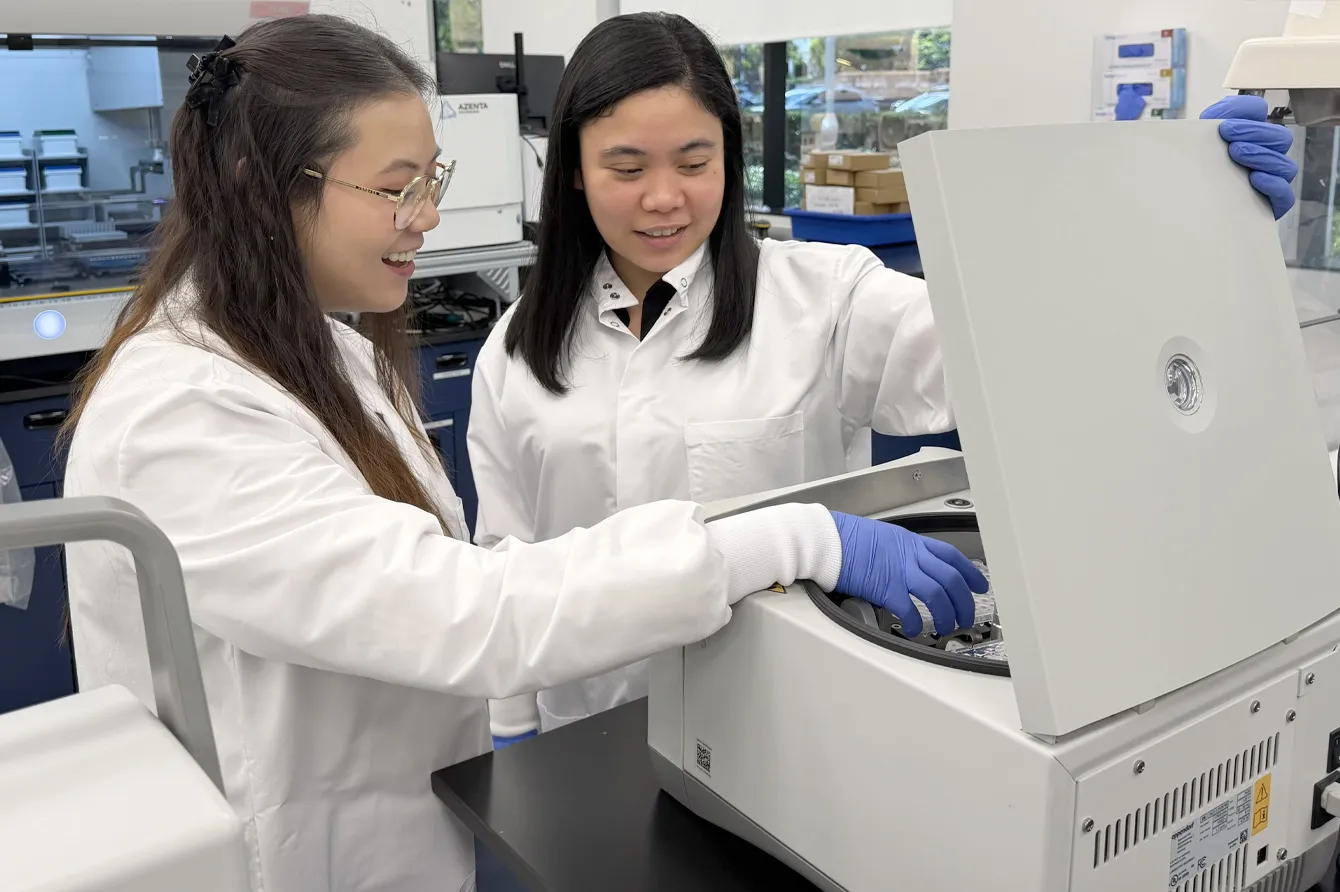
Building the next generation from within
As Hologic’s CLS training program continues, its first graduates are already thinking about how they can support future trainees. Ha hopes to offer training support. Quitevis is open to mentoring and sharing what she learned. Vu encourages interested colleagues to stay determined and make their goals known. Valerio advises future applicants to get exposure to clinical laboratory testing early and often.
That spirit of mentorship is exactly what Church-Nguyen hoped to build.
“My aim would be to continue to build the talent we have right here,” Church-Nguyen said. “I hope we can keep inspiring the next generation of clinical laboratory scientists and instill in them how meaningful this job is.”
© 2026 Hologic, Inc. Hologic, Biotheranostics, Breast Cander Index, BCI, and CancerTYPE ID are trademarks of Hologic, Inc. and/or its subsidiaries, registered in the U.S. and/or other countries.
Related Stories:
Virginia Carnesale Tells PEOPLE the Breast Cancer Index Test “Changed Her Life”
Life After Breast Cancer: Why Treatment Decisions Are Becoming More Personal
Hologic Signs Definitive Agreement to Acquire Reveal Genomics